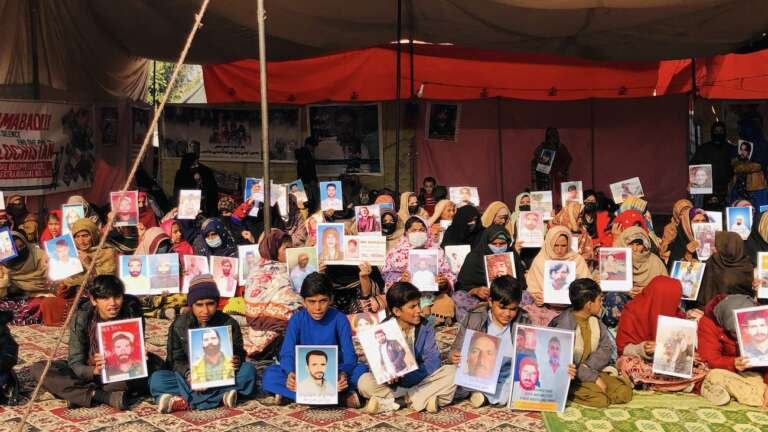
“He walked out of the house and vanished into the custody of silence.”
Enforced disappearances are the most haunting and persistent human rights violation in Balochistan. Thousands of students, writers, doctors, teachers, activists, and laborers have disappeared — not through the shadows of crime but by the hands of those meant to protect.
The practice follows a brutal cycle: plainclothes personnel arrive in unmarked vehicles, take a person without charges or warrants, and deny any knowledge of their whereabouts. Months pass. Years. For families, the search begins — and never ends.
Children grow up protesting. Mothers camp on roadsides with only photographs and sand-smeared slippers of the missing. These aren’t just numbers — they are lives forcibly erased. The trauma is generational. Despite numerous appeals, protests, and hunger strikes, the state continues to criminalize the families’ voices. Students speaking up are punished. Women leading protests are arrested. Meanwhile, international bodies like the UN call it what it is: a crime against humanity.
To disappear a person is to punish an entire community — not just with loss, but with fear and silence. And yet, Baloch families continue to resist, not with weapons, but with unwavering remembrance.