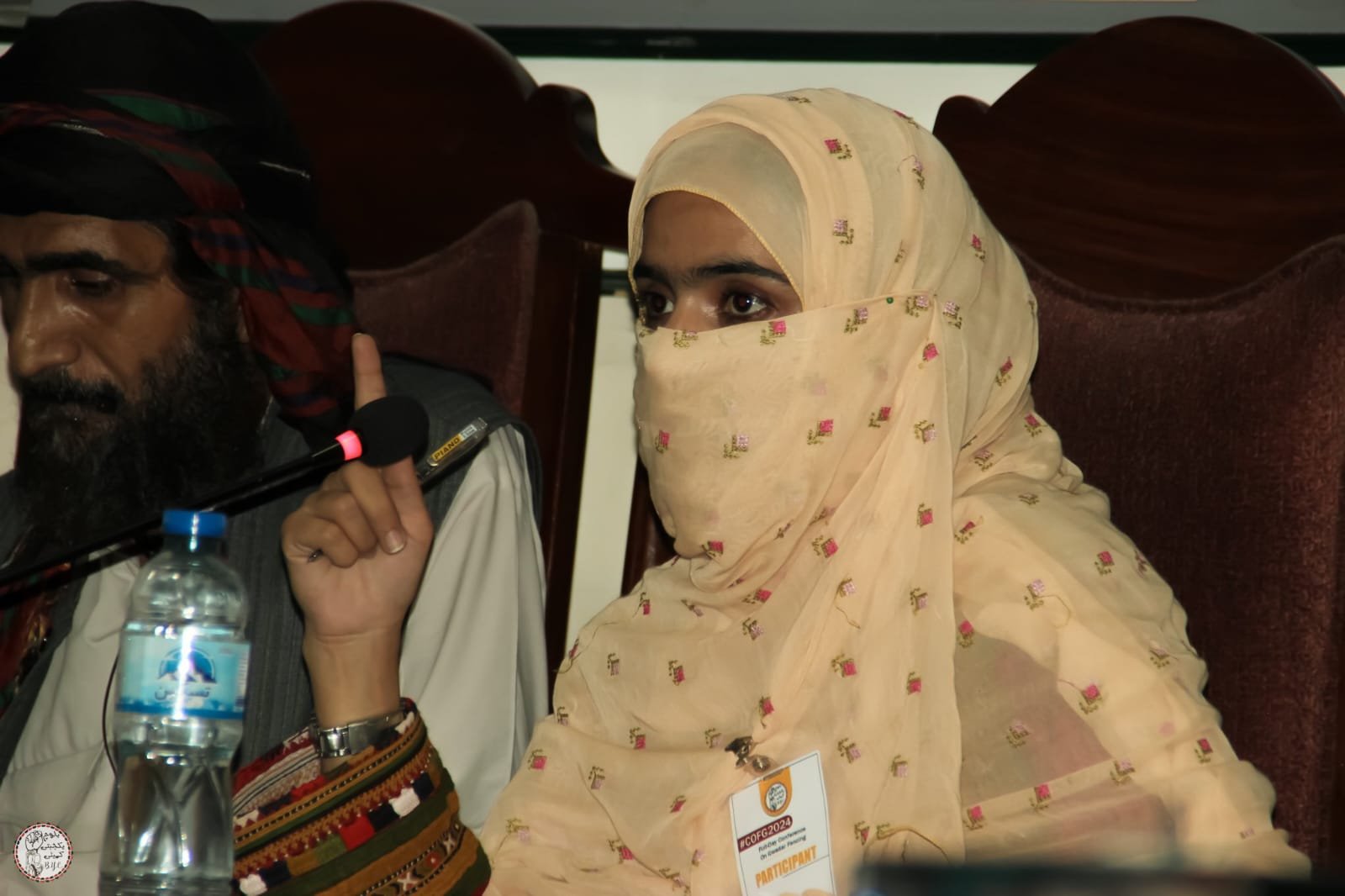
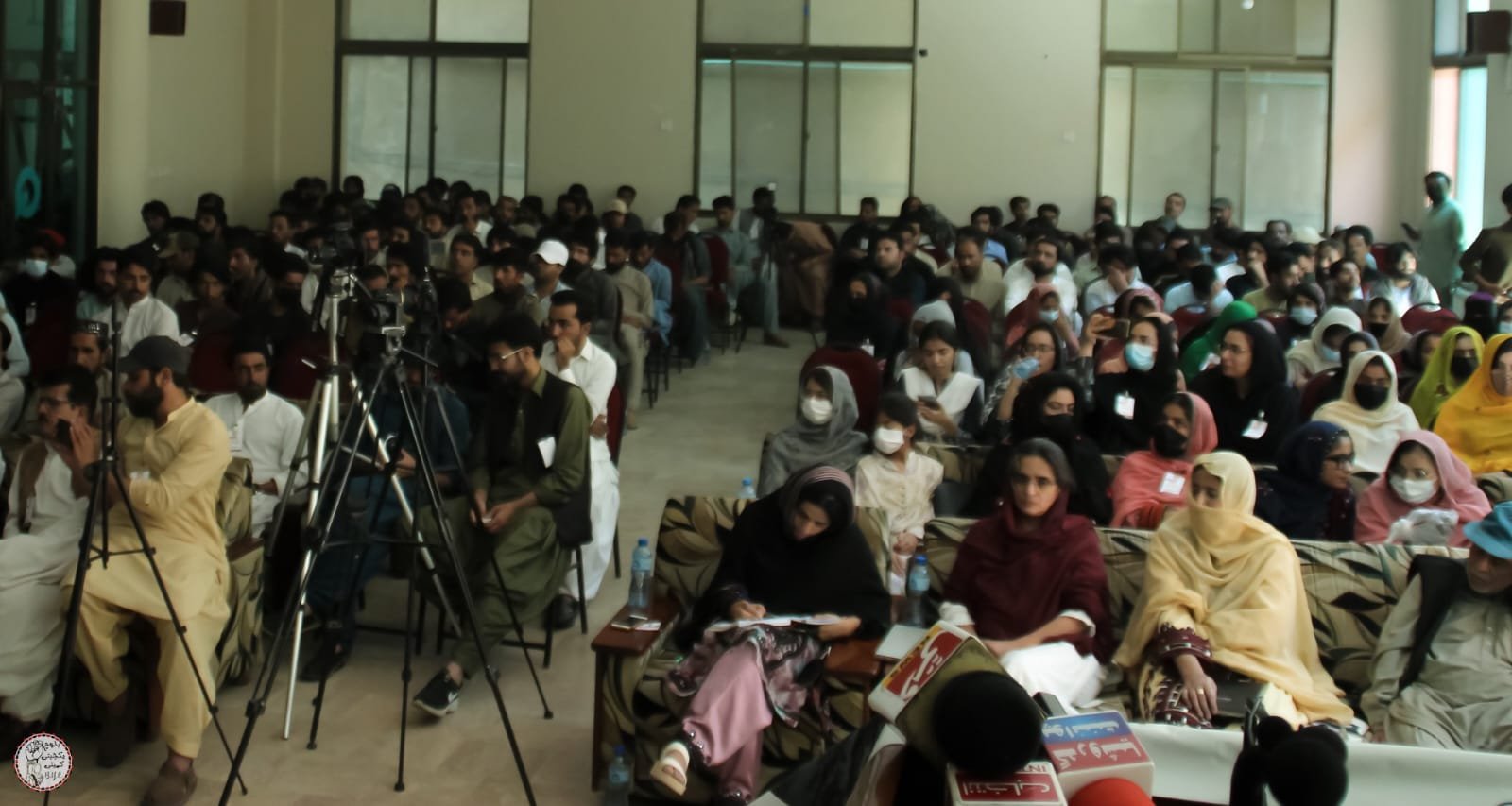
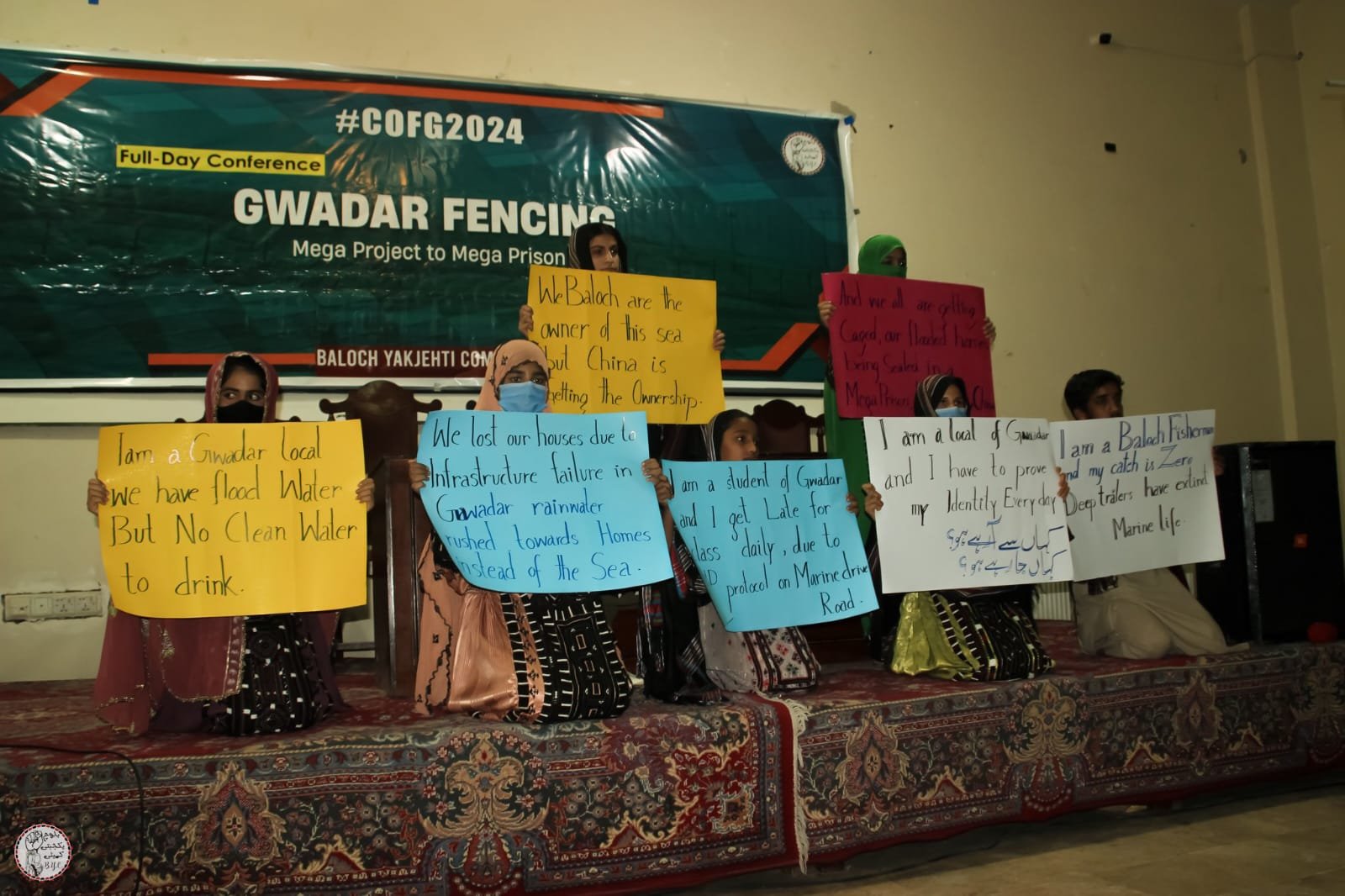
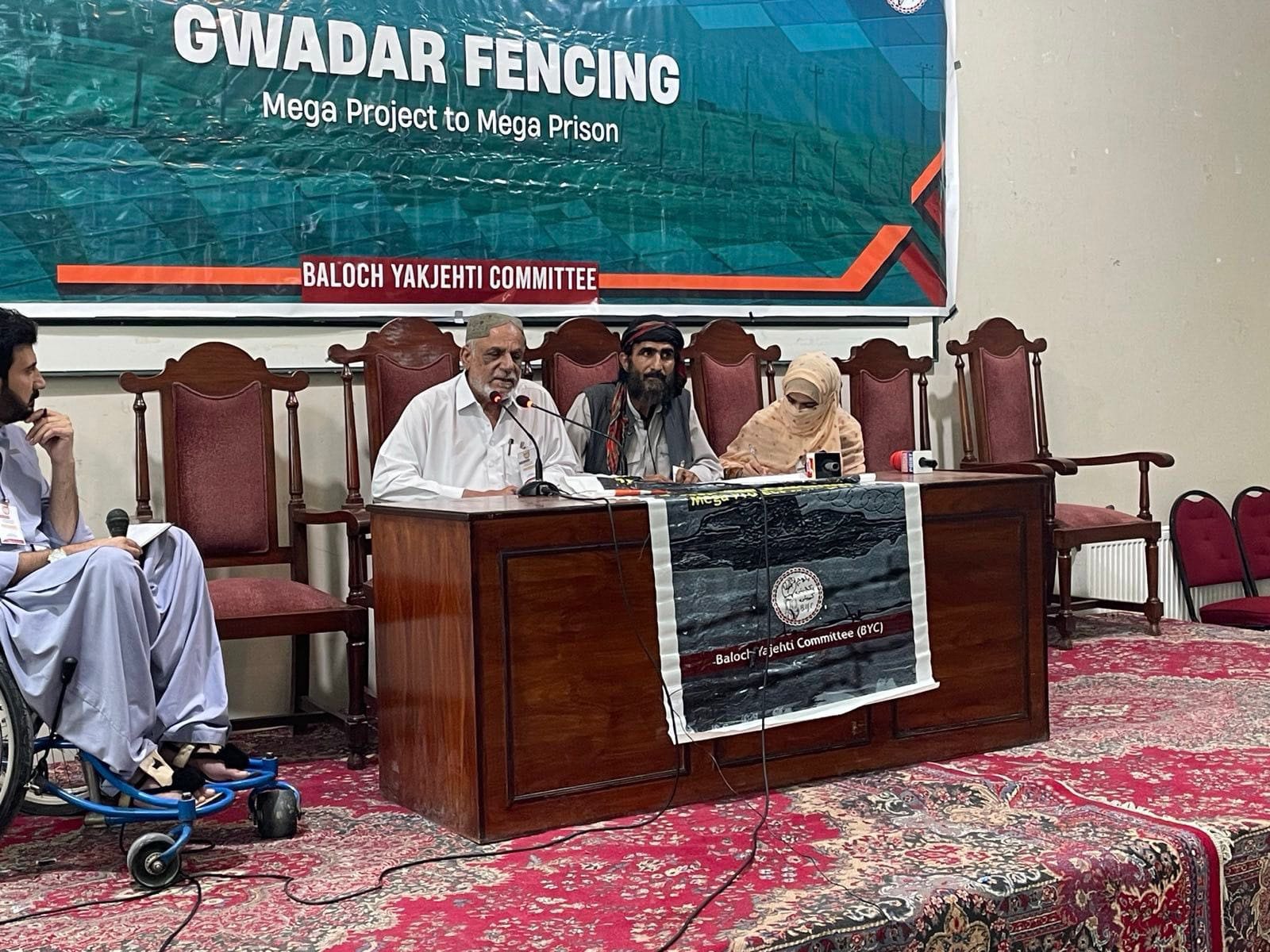
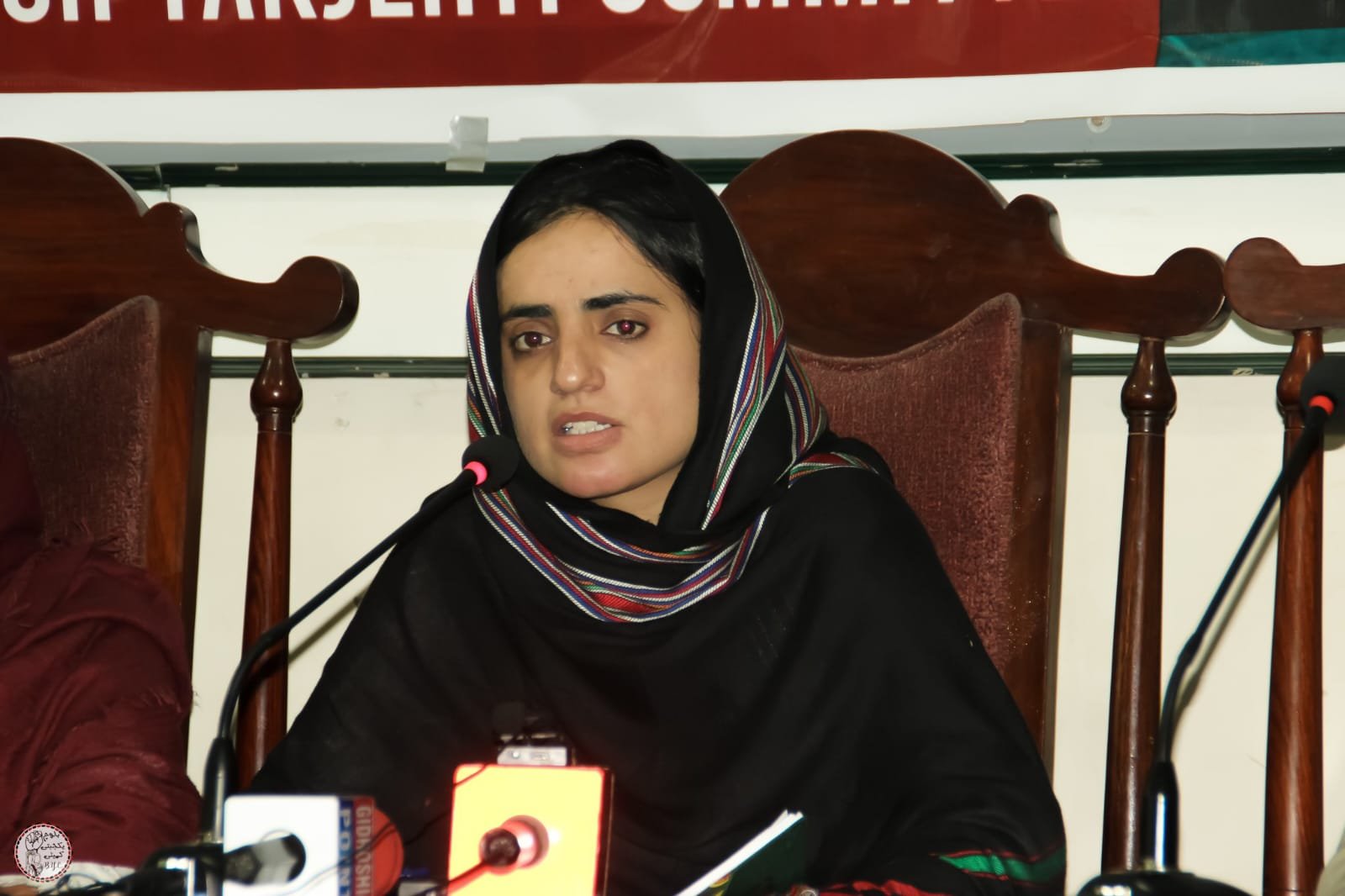
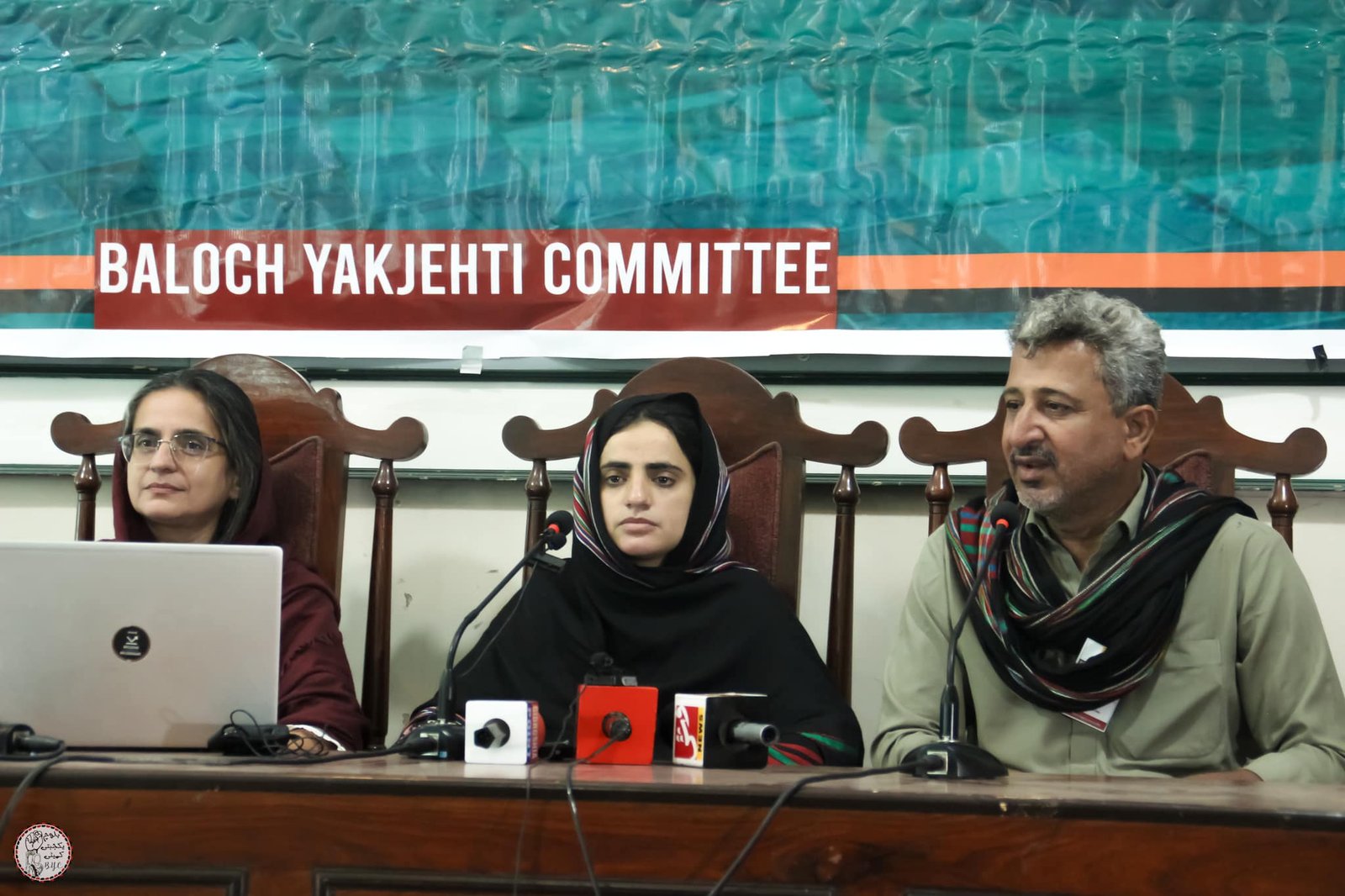
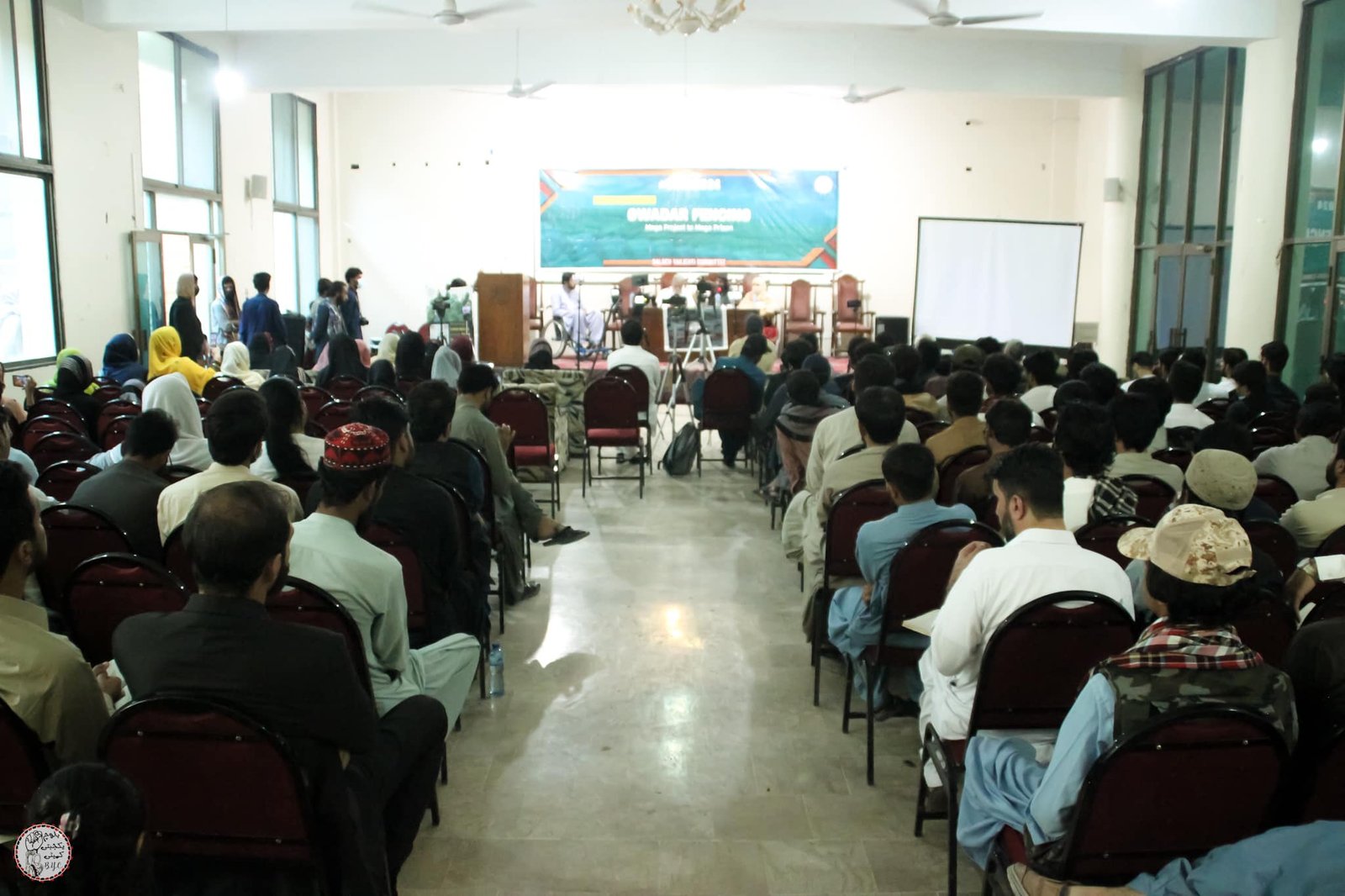
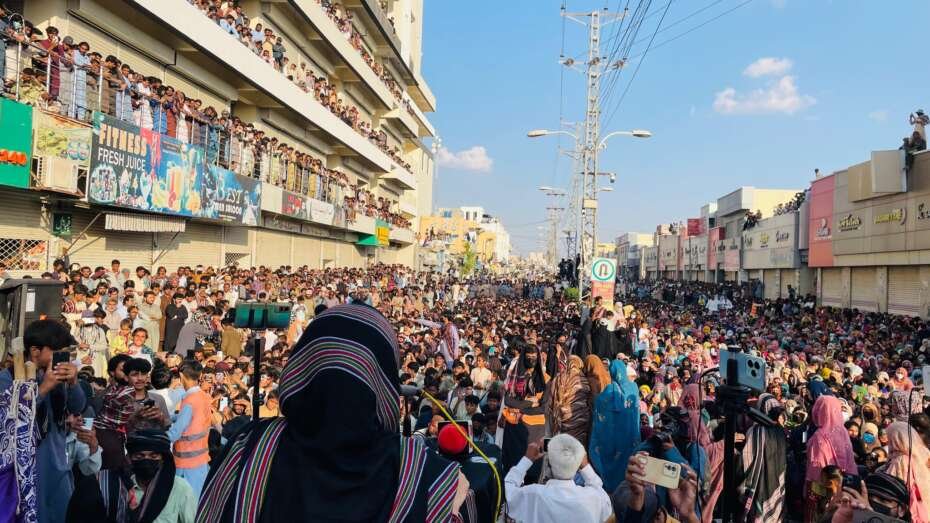
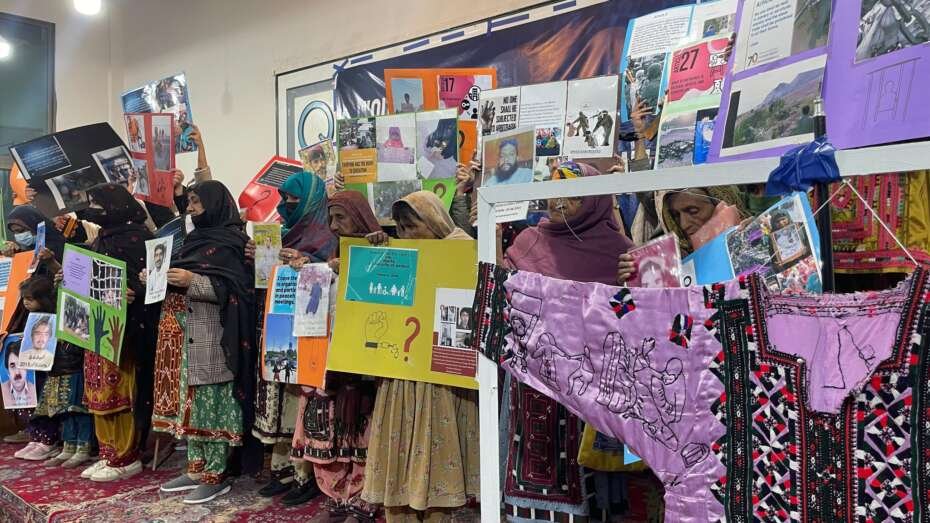
The Baloch Yakjehti Committee organized a full-day academic conference on the Fencing of Gwadar in Quetta Press Club today. The event was meant to start at 11 AM, but the Quetta district administration and the Police not only closed the Quetta Press Club but also the roads in the vicinity to sabotage the conference and prevent the guests from attending the conference. Despite the utter nonsense of the District Administration, the conference started and was conducted in a quite professional way. A huge number of participants made the conference a success.
The conference commenced with a welcome note by Hazaran Baloch, followed by the Balochi anthem. Afterward, Farzana Baloch highlighted the objectives of the Conference as follows: to initiate scholarly debate regarding the fencing of Gwadar, to strategize resistance methods, to assess the socio-economic and political impacts, and to uncover the legal and international laws regarding fencing the port city. Moreover, Mir Muhammad Ali Talpur presented a paper titled “CPEC, Gwadar fencing and its geopolitical impact on Balochistan. He highlighted that CPEC is the main catalyst for fencing Gwadar, and the mega project has been a bane for the Baloch. A panel discussion followed this, “How can we resist the fencing of Gwadar?”. Herein, the panelists emphasized the need to unite and resist the fencing. Shahgi said that the entire population of Gwadar would be direly affected by the fence and would lose access to the sea, which is the prime source of their livelihood. Dr. Sabiha Baloch strongly protested the State’s designs to convert the port city into a mega-prison for the natives of Gwadar. Dr Manzoor Baloch asserted the serious need for research and scholarly literature on the issues of Baloch and Balochistan, including fencing in Gwadar. Lala Wahab Baloch uncovered the facts regarding the increasing religious fervor in Gwadar aimed at sabotaging the nationalist struggle of the Baloch.
Furthermore, the next panel discussion was about the “CPEC and the militarization of Gwadar.” In this discussion, Abira Ashfaq said that fencing in Gwadar constitutes the crimes of apartheid and genocide. She added that the Baloch can take their case to the International Criminal Court (ICC), as both genocide and apartheid are recognized crimes against humanity. Advocate Hafeez Baloch spoke of the lack of transparency of the mega projects in Balochistan and Baloch areas in Karachi. He said that these mega projects are neo-colonialist and only benefit the country’s military establishment and feudal elite.
Similarly, Dr. Mahrang Baloch who is leading the Baloch Yakjehti Committee, illuminated that the entire population of Gwadar are living in a constant state of fear since the start of the CPEC. The State has segregated the city into compartments, with the military and settlers living in concrete and steel fortifications while the natives are caged outside the city under the open sky. She added that the fencing not only concerns Gwadar but the entire Balochistan. She also praised the courage and resilience of the Baloch natives of the city who, despite Chinese and Pakistani persecution and harassment, are still not willing to leave their ancestral land. In her concluding remarks, she said that we will continue to resist the colonial designs aimed at the genocide of the Baloch people.